![Is It Legal to Sell a House with Asbestos in [market_city]](https://image-cdn.carrot.com/eyJidWNrZXQiOiJwcm9kdWN0aW9uLmNhcnJvdC11cGxvYWRzLm9uY2Fycm90LmNvbSIsImtleSI6InVwbG9hZHMvc2l0ZXMvODEzNjUvMjAyNi8wNy9Jcy1JdC1MZWdhbC10by1TZWxsLWEtSG91c2Utd2l0aC1Bc2Jlc3Rvcy5qcGciLCJlZGl0cyI6eyJyZXNpemUiOnsid2lkdGgiOjExNTJ9LCJ0b0Zvcm1hdCI6IndlYnAiLCJ3ZWJwIjp7InF1YWxpdHkiOjcwfX19)

Most sellers I talk to are convinced that asbestos means the sale is dead. They’ve already mentally written off thousands of dollars, called a contractor for a removal quote they can’t afford, and started wondering if they should just walk away from the property entirely. That reaction is understandable. It’s also, in almost every case, wrong.
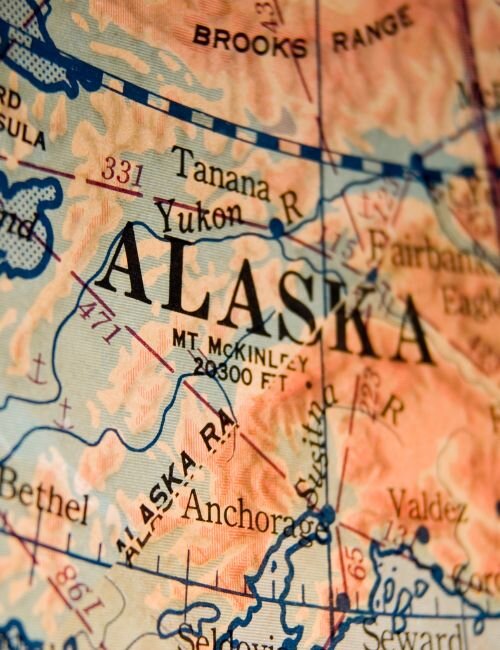
You can sell a house with asbestos in Alaska. Plenty of people do it every year. The path forward depends on what you know, what you disclose, and which type of buyer you’re targeting. Get those three things right, and asbestos becomes a manageable issue, not a catastrophe (cash buyers especially tend to take it in stride).
Yes, You Can Sell: Here’s What Actually Happens
Sellers often ask whether buyers will simply walk away the moment asbestos comes up. Some will. But the ones who walk are usually first-time buyers using conventional financing, and they’re rarely your best option for a property with known issues anyway. Cash buyers, investors, and experienced homebuyers who understand older construction don’t panic over asbestos-containing materials (ACM) the way a nervous first-timer might.
The Brooks family came to us last summer with a house in Muldoon, an established East Anchorage neighborhood packed with mid-century homes. They were splitting assets in a divorce and had no interest in managing repairs or a drawn-out listing process. The garage still had original 9×9 floor tiles from the early 1970s, the kind that almost certainly contain asbestos. We bought the property as-is on a Thursday, closed in under two weeks, and they walked away without touching a single tile. This is the kind of outcome that’s possible when you know your options, and I’ve seen sellers genuinely surprised that it’s even on the table.
Alaska home prices have held up well, with the statewide median sitting around $420,506 according to recent Redfin data. A house with disclosed asbestos in good condition isn’t automatically worth less. Buyers price in the management cost, not the scare factor (encapsulation runs far cheaper than removal).
Sell your home for cash in Alaska quickly with a fair cash offer and a seamless selling experience.
What Is Asbestos and Why Is It Dangerous?
You’ve heard the word a thousand times, but what exactly are we talking about?
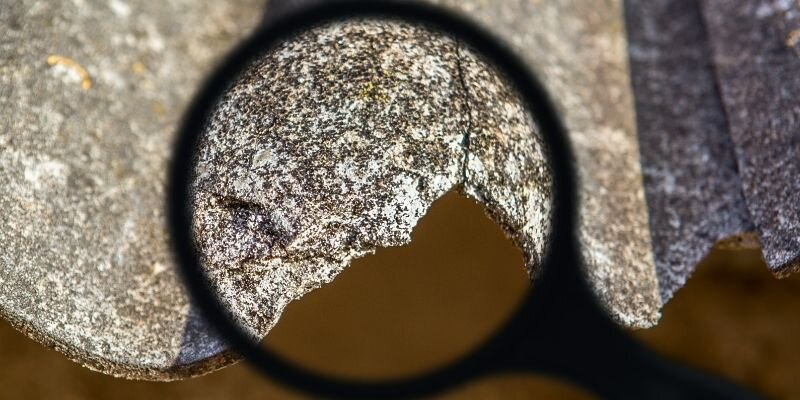
Asbestos is a group of naturally occurring silicate minerals that were prized in construction for their heat resistance and tensile strength. Builders loved it for its fire-resistant and insulating properties, so it ended up in everything from floor tiles to pipe wrapping to ceiling texture. The problem isn’t the material sitting undisturbed inside your wall. The problem is what happens when it gets cut, sanded, scraped, or broken, which is exactly why renovation work on older homes triggers the real liability.
When asbestos-containing materials are disturbed, they release microscopic fibers into the air. Those fibers lodge in lung tissue and don’t leave. Over time, the accumulation causes serious damage. Long-term exposure can lead to conditions including asbestosis, lung cancer, and mesothelioma. Mesothelioma cancer is particularly grim because it can take decades to appear after initial exposure, which means people often don’t connect the diagnosis to a home they lived in thirty years ago.
Roughly half of all U.S. homes built before the late 1970s contain asbestos, often hidden in popcorn ceilings, floor tiles, or pipe insulation. This is not a fringe problem. This represents a massive portion of Alaska’s existing housing stock, particularly in older Anchorage neighborhoods like Spenard, Fairview, and Mountain View, plus older homes throughout Fairbanks, Juneau, and the Kenai Peninsula.
Asbestos that’s fully intact and sealed poses minimal immediate health risk. Disturbed asbestos is a wholly different matter.
Where Can You Find Asbestos in an Alaska Home?
Sit across the table from me for a second, because this is where most homeowners get surprised.
Asbestos wasn’t used in one or two building products. It showed up in dozens of different materials. Alaska homes built before 1980 may contain asbestos-containing materials in places that look completely ordinary. Popcorn ceilings installed before 1979 are a common source, and floor tiles made from asphalt, vinyl, or rubber, especially the 9×9-inch squares popular in pre-1980s construction, frequently contain the mineral.
Beyond ceilings and floors, ACM shows up in pipe and duct insulation, roofing shingles, siding panels (the flat cement-board variety common on older homes throughout Palmer and Wasilla), attic insulation, drywall joint compound, and even some adhesives and caulking. Boiler and furnace insulation blankets in older Anchorage homes are another commonly overlooked problem area.
Flooring workers in past decades suffered from asbestos-related diseases because they were tearing out old tiles without realizing the dust they created was toxic. This history matters for sellers today because it means any renovation work done on your property before the 1990s may have disturbed asbestos-containing materials without anyone knowing it, and I’ve seen that surprise buyers and sellers alike during inspections.
Home inspectors can visually flag materials that may contain asbestos, but a visual alone isn’t a test. Only a certified lab analysis of a physical sample confirms whether asbestos fibers are actually present. Sellers preparing to list can save a lot of back-and-forth once under contract (and renegotiated offers once in escrow) by getting a professional inspection before putting the sign up.
At Alaskan Home Buyers, we buy houses in Anchorage and nearby areas, making cash home sales fast, simple, and hassle-free.
What If Your Alaska Land Has Naturally Occurring Asbestos?
Here’s a wrinkle that applies specifically to Alaska and that most real estate articles never mention.
Beyond asbestos-containing building materials, Alaska has deposits of naturally occurring asbestos (NOA) in certain rock and soil formations. This isn’t a product inside your house; it’s a geological reality in parts of the state. When land is graded, excavated, or when gravel is used for road base or fill, naturally occurring asbestos fibers can be disturbed and become airborne just like their manufactured cousins.
Alaska statute addresses this directly, noting that contractors may qualify for civil immunity protections when using gravel or aggregate material that tests at or above 0.25 percent naturally occurring asbestos by mass, provided testing follows methods prescribed by the Department of Transportation and Public Facilities. Writing it into law tells you the state takes this issue seriously enough, which isn’t something legislators do casually.
If your property is in an area with known NOA deposits, or if you’ve done excavation work, grading, or added gravel fill, that history belongs on your disclosure. Rural properties on the Kenai Peninsula, parts of the Interior, and areas near certain rock formations in Southeast Alaska may carry this consideration. Buyers won’t necessarily walk away, but they deserve the information, and handing them a surprise after closing is a much worse outcome than disclosing upfront (I’ve seen sales unravel over exactly this).
ACM Regulations in Alaska
$25,000 per day. Fines at this level can come with improper asbestos handling during a renovation or demolition, under federal enforcement authority.
Alaska has measures in place to protect residents from asbestos fiber exposure, and during demolition or renovation of most structures, owners are required to identify and properly manage asbestos-containing material. The state works alongside federal oversight from the Environmental Protection Agency (EPA) and enforces its own requirements under Title 18, Chapter 31 of the Alaska Statutes.
Any contractor you hire for asbestos work in Alaska must hold the appropriate state certification. The Alaska Department of Environmental Conservation oversees the licensing and training requirements for asbestos abatement professionals. Hiring an uncertified worker, or worse, doing the work yourself, doesn’t just risk your health. It can trigger regulatory action that becomes a separate problem on its own when you’re trying to close a sale, and in my experience, that’s exactly when these issues tend to surface.
The EPA enforces asbestos regulations through the Asbestos Hazard Emergency Response Act (AHERA) and the Toxic Substances Control Act (TSCA). These federal rules set the floor; Alaska can and does go further. If you’re planning any renovation before a sale, get an asbestos survey done first (before permits, before contractors). Taking that one step keeps you compliant with both state and federal requirements and protects everyone involved.
What Do Alaska Asbestos Laws Mean for Property Owners?
A seller in Juneau listed a 1965 ranch house without mentioning the asbestos pipe wrap in the crawlspace. The buyer found it during their own inspection, the sale nearly collapsed, and the seller ended up accepting a much lower price than they would’ve gotten if they’d simply disclosed the issue from the start.
That outcome is completely avoidable, and I still see it play out constantly.
If you own a house, condominium unit, or parcel of land in Alaska that you want to sell, there’s an important state law to know about: it requires that before the buyer makes a written offer, the seller give them a completed disclosure statement. The document asks directly about asbestos and other environmental hazards.
Alaska Stat. 34.70.090 states that a seller who willfully violates the disclosure requirements or fails to perform a duty it requires is liable to the buyer for up to three times the actual damages suffered. Triple damages. This is not a slap on the wrist. Pair that with potential fraud liability and the possibility of paying the buyer’s legal fees, and the math on non-disclosure turns very unattractive very fast.
Alaska’s disclosure form uses the word “known” in connection with defects, so you don’t have to hire an inspector or perform special investigations; the law relies mostly on your experience living in the house as the basis for your disclosures. But deliberately ignoring what you already know crosses a legal line. A good real estate attorney can help you draft disclosures that are accurate, complete, and protect you from future claims.
Can You Sell a House with Asbestos in Alaska?
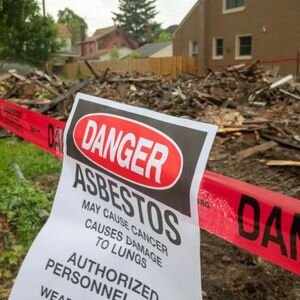
A couple in Eagle River had owned their 1973 split-level for decades. They got an inspection report back flagging ACM in the attic insulation and the original floor tiles in the basement, and they were certain no conventional buyer would touch it.
They were half right.
Traditional buyers relying on FHA or VA mortgage lending often face lender-mandated asbestos remediation before a loan can close. That’s a real obstacle. But cash buyers and investors who purchase properties as-is don’t have a lender dictating conditions. This completely changes the math.
Selling a house with asbestos in Alaska isn’t illegal. Selling without disclosing it is. Those two facts together define your path forward. Disclose what you know, document it properly, and then choose the sale channel that fits your situation. A traditional listing with an agent can absolutely work if the asbestos is in good condition and well-documented. For sellers who don’t want to deal with inspection contingencies, buyer demands for remediation credits, or the risk of a sale falling apart at the last minute, a direct sale to a cash buyer is a clean alternative.
Alaska’s median days on market sit at 35, with an average of about 42 days to sell statewide. Add asbestos to the mix on a traditional listing, and that timeline can stretch considerably as buyers negotiate, request testing, or simply walk. Speed matters to a lot of sellers, and that’s worth factoring in.
Alaskan Home Buyers works with homeowners in exactly this situation across Anchorage, the Mat-Su Valley, Fairbanks, and beyond. We buy properties as-is, asbestos and all, so sellers don’t have to fix anything before closing.
How to Sell a Home with Asbestos in Alaska
Your disclosure form goes out before the buyer makes an offer, not after. That sequence matters more than most sellers realize.
A lot of sellers hand over ACM documentation during the inspection period, which puts them in a reactive position. Savvy buyers who learn about asbestos mid-transaction sometimes use it as leverage to renegotiate price aggressively, even if the asbestos is undisturbed and poses no active risk. Front-loading that information, giving buyers the full picture before they write an offer, changes the dynamic. Buyers who proceed do so with clear eyes, and you’ve removed a major renegotiation card from their hand before the sale even gets wobbly.
Beyond disclosure, get a professional assessment that documents the condition and location of any ACM. A written report from a certified inspector showing that materials are intact and not friable (meaning not crumbly or easily broken apart) is worth real money to a buyer who’s on the fence. It transforms an unknown risk into a quantified one.
If you’re going the traditional listing route, price the property to reflect the asbestos management cost, but don’t over-discount. Buyers in markets like South Anchorage or Juneau’s Mendenhall Valley who want a specific neighborhood will pay fairly for a property with properly documented and stable ACM.
For sellers who’d rather skip the back-and-forth entirely, a direct buyer like Alaskan Home Buyers will give you a straightforward offer based on the property’s current condition. No repair demands, no lender requirements, no inspection contingencies that blow up at the last minute.
What Should You Do If Your New Alaska House Contains Asbestos?
Buying a house and then finding asbestos in it doesn’t mean you were deceived. It might just mean the seller genuinely didn’t know.
Alaska’s disclosure law is built around what the seller “knew,” and they don’t have to perform special investigations beyond their own experience living in the house. So if a seller moved into a 1968 Spenard bungalow and never touched the textured ceiling or had work done on the insulation, they may legitimately have had no idea ACM was present.
Get a certified inspector in before you do any renovation work whatsoever. Painting, patching, drilling into walls, pulling up old floors: any of those activities can disturb asbestos-containing materials and release fibers without you realizing it. Have your property assessed, get a written report, and understand exactly what you’re dealing with before you pick up a hammer.
Have you thought about whether your mortgage lender needs to know? Some loan types, particularly FHA and VA, have specific property condition requirements. If ACM is discovered after closing and your lender has standards that weren’t met, consult a real estate attorney before doing anything else.
If the asbestos was present and the seller knew about it and said nothing, that’s a different situation, and one worth discussing with a lawyer who handles real estate transactions in Alaska.
What If Your New Alaska Property Has Asbestos Waste on It?
Getting this part wrong can turn a manageable problem into an environmental liability that follows a property title for years.
Asbestos waste, meaning removed ACM that hasn’t been properly disposed of, is regulated separately from intact materials inside a structure. If you purchased land or a property and found piles of old pipe insulation, roofing material, or floor tile debris sitting on the ground, don’t move it. Don’t bag it and throw it in the dumpster. Don’t have a general contractor haul it away.
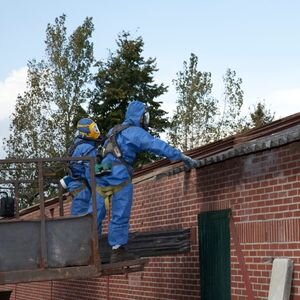
ACM must be removed, packaged, and disposed of according to regulatory standards to avoid harmful exposure. In Alaska, asbestos waste must go to an approved disposal facility, and the handling, transport, and disposal must be done by certified professionals using the correct containment procedures.
Improper disposal can result in federal EPA enforcement action in addition to state penalties. It can also create a chain of title issue that surfaces when you try to sell, since environmental contamination on a property can cloud the sale and send mortgage lenders running. The Alaska Department of Environmental Conservation is the primary state agency for waste disposal guidance, and its website offers clear direction on approved disposal methods and certified haulers (not all haulers qualify).
An attorney familiar with environmental real estate law in Alaska is worth consulting if you’ve inherited a property with existing asbestos waste on the land. This isn’t a situation where guessing serves you well.
How to Remove Asbestos-containing Materials Safely
A weekend with a utility knife and some heavy-duty garbage bags sounds like it would handle the problem. It doesn’t work that way.
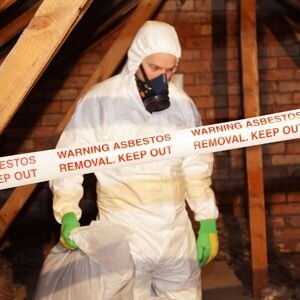
Most asbestos experts agree that a layperson should not attempt to fix, patch, or seal asbestos themselves, and while no federal law prohibits homeowners from removing asbestos, states, counties, and cities may have regulations that prohibit self-removal. Alaska requires licensed contractors for this work. State certification requirements for asbestos abatement workers exist precisely because the cutting, scraping, and bagging process generates airborne fibers that can contaminate an entire home in minutes.
I’ve seen sellers make this mistake more than once: they tear out an old popcorn ceiling themselves, thinking they’re helping their sale, and end up with a contamination situation that costs far more to remediate than the original material would have. The disruption creates a bigger problem than the intact ACM did.
Professional asbestos testing by certified inspectors typically runs between $230 and $780; DIY kits are cheaper at around $30 to $60, but the samples still have to go to an EPA-certified laboratory for analysis. Full abatement by a licensed contractor costs more and varies based on square footage and material type, so two properties of similar age can land at very different price points. In Anchorage and the Mat-Su Valley, get at least two or three quotes from certified companies and ask specifically whether the scope covers disposal fees, post-abatement air testing, and documentation for your real estate transaction.
Priya Hernandez tried to sell her Kodiak home twice through traditional listings. Both times, the sale fell apart after inspection, buyers spooked by attic insulation that tested positive for asbestos. On a Wednesday morning after the second expiration, she called us, and we walked the property that same afternoon (attic access included, no argument). No remediation required on her end, no third listing, no more waiting. We closed, and she moved on.
That kind of outcome is available to more Alaska homeowners than realize it.
Frequently Asked Questions
Do Realtors Have to Disclose Asbestos?
Yes, in Alaska, sellers and their agents are required to disclose known hazards, including asbestos, on the state’s Residential Real Property Transfer Disclosure Statement. Alaska law requires sellers to report known hazards like asbestos in a property, and failure to disclose these risks can lead to serious health consequences and legal liability. An agent who helps a seller knowingly conceal a material defect can share in that legal exposure.
What Is the 3-5-7 Rule for Asbestos Sampling?
The 3-5-7 rule is an industry sampling guideline used by certified inspectors to determine how many bulk samples to collect from a homogeneous area of suspected ACM. The numbers refer to sample quantities based on the surface area of the material being tested, with three samples for smaller areas, five for medium, and seven for larger ones. This protocol helps ensure a statistically valid result and is used by licensed professionals, not a DIY approach.
Will 30 Minutes of Asbestos Exposure Hurt You?
A single brief exposure, like walking through a room where someone disturbed the ceiling for a few minutes, is unlikely to cause disease on its own. Asbestos exposure has been a serious issue for decades, and long-term exposure is what leads to conditions such as asbestosis, lung cancer, and mesothelioma. The diseases associated with asbestos are linked to repeated or prolonged contact with airborne fibers, not a one-time incidental encounter. That said, no level of exposure is considered completely safe, so avoid disturbing suspected ACM and let certified professionals handle any testing or removal.
Do Sellers Have to Tell Buyers About Asbestos in Alaska?
Yes. Alaska’s Residential Real Property Transfer Disclosure Statement specifically asks sellers whether they are aware of hazardous substances such as asbestos on the property. Skipping that disclosure or answering it dishonestly isn’t just an ethical problem; it carries real legal consequences under Alaska statute, including potential triple-damages liability.
If you’re sitting on a property with asbestos and you’re not sure which direction makes sense for your situation, reach out to Alaskan Home Buyers. We’ve worked through these situations across the state, from Anchorage to the Valley to Fairbanks, and we’re happy to walk you through your options without any pressure or obligation.
Helpful Alaska Blog Articles
- Selling a Probate House in Alaska
- How to Sell a Hoarder House in Alaska
- Does a Seller Pay Closing Costs in Alaska?
- Can I Sell a House with a Quitclaim Deed in Alaska?
- Sell House with Water Damage in Alaska
- Sell Fire-Damaged House Alaska
- How To Sell Your House With Foundation Problems In Alaska
- Selling home with reverse mortgage in Alaska
- Can You Sell a House with Tenants in Alaska
- Can You Sell a House With Asbestos in Alaska
- Can You Sell a House as-is Without Inspection in Alaska
- Is the Seller Responsible for Any Repairs After Closing
- How Long Does It Take to Sell a House in Alaska