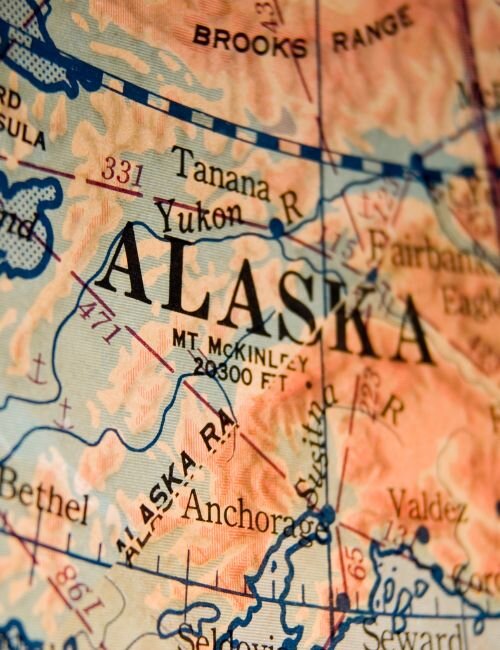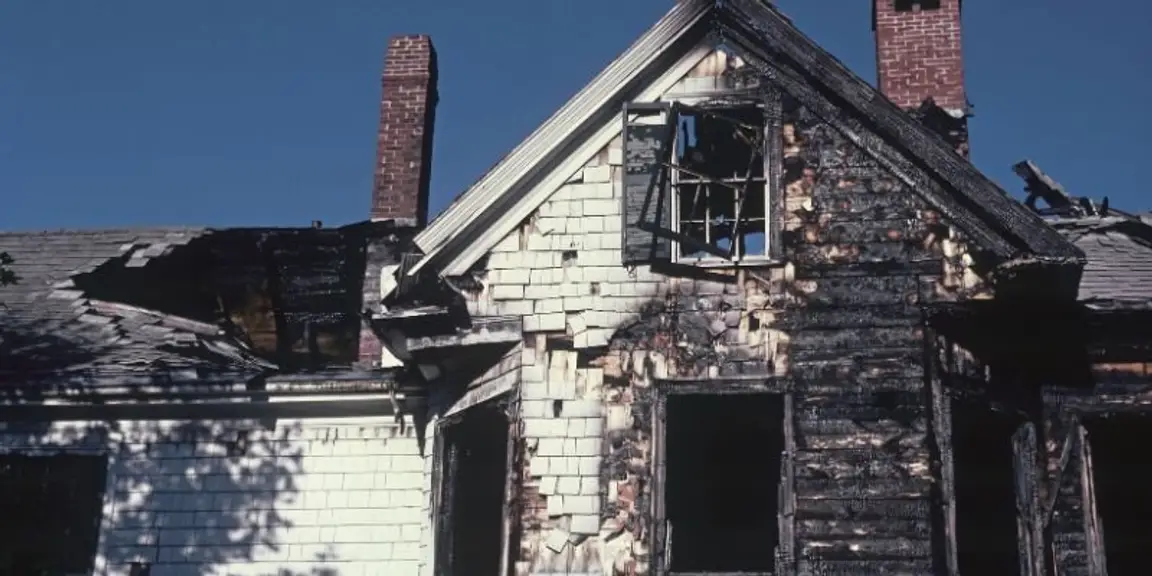

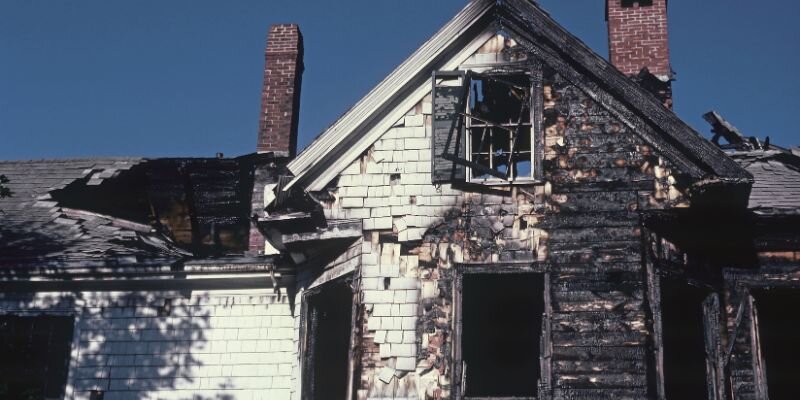
Looking at a fire-damaged house in Alaska, you’re probably feeling overwhelmed. Trust me, I’ve bought hundreds of properties across the Last Frontier, from Anchorage to Fairbanks to remote cabins near Denali. Fire damage changes everything about your selling timeline and options.
The good news? You’ve got more choices than most homeowners realize. Whether it’s smoke damage from a wood stove mishap or structural damage from a wildfire that swept through your area, some buyers will take your property as-is. Let me walk you through exactly what you need to know.
Alaska Real Estate Market Overview
Alaska’s housing market remained resilient in 2025. The state’s median home sale price reached approximately $412,000, reflecting modest year-over-year growth. At the same time, home sales activity remained somewhat subdued, with fewer transactions than the previous year, as affordability challenges and higher mortgage rates kept some buyers on the sidelines. Despite slower sales volume, steady demand, and limited inventory, it continued to support home values across many Alaska markets.
What does this data mean for you? The median days on the market were 56 days, up 9 days year-over- year. Properties are sitting on the market longer than they used to. That’s actually good news if you’re selling fire-damaged property because it means buyers have more time to consider an unconventional sale.
Anchorage specifically shows even faster movement. On average, homes in Anchorage sell after 13 days on the market, down from 18 days last year. The Mat-Su Valley, including Palmer and Wasilla, has similar patterns but with more price sensitivity.
Here’s something most real estate agents won’t tell you: fire-damaged properties often move faster than clean ones when priced correctly. Investors and contractors know exactly what they’re looking at. They don’t need three weeks to make up their minds.
Current market conditions can create opportunities to sell a fire-damaged property. While housing inventory in Alaska has continued to increase compared to previous years, fire-damaged homes operate in a niche market distinct from traditional home sales. Investors and cash buyers often seek these properties specifically, meaning they face less direct competition from move-in-ready homes and can attract buyers looking for renovation or redevelopment opportunities.
Cash buyers and real estate investors are actively searching for these opportunities. Companies like Alaskan Home Buyers specialize in situations like these. If you want to understand the full process, here’s how Alaskan Home Buyers buys homes and what happens step-by-step when you sell a fire-damaged property.
Insurance claims for fire damage have become increasingly common in recent years as wildfire losses continue to affect homeowners across the country. As a result, many insurance adjusters are handling a higher volume of claims, and property owners often find themselves navigating complex settlement negotiations while deciding whether to repair, rebuild, or sell their damaged property.
The reality? Alaska’s real estate market can accommodate fire-damaged properties when they are positioned correctly. You’re not competing with move-in-ready homes. You’re in a specialized market with specific buyers who understand the potential.
Alaska Wildfire Property Damage Insurance Coverage Options
Let’s talk insurance first, because the cost affects every decision you’ll make. The average cost of home insurance in Alaska is $1,355 per year or $113 a month. That’s actually lower than the national average, but wildfire coverage varies dramatically by location and insurer.
Most standard homeowners’ policies in Alaska cover fire damage, but there are crucial details to consider. Your policy likely covers the structure, personal property, additional living expenses, and liability. But here’s where it gets tricky: coverage limits, deductibles, and what constitutes “adequate” repair versus replacement.
If a wildfire damages your house and things in it, and you have to make a claim, your homeowners’ insurance rates will go up by about 24%. This is why many people are considering selling their homes instead of building new ones. The price of long-term insurance can go up a lot.
Wildfire risk remains a concern in Alaska, particularly during years with warmer temperatures and reduced snowpack. Recent fire seasons have highlighted how quickly wildfires can affect local communities, prompting temporary closures, evacuations, and firefighting efforts. As changing weather patterns continue to influence fire conditions, homeowners across the state are becoming increasingly aware of the risks that wildfires can pose to their properties.
But here’s what they don’t always explain clearly: you can sell to a cash buyer before completing all repairs. The insurance payout is yours, not the property. Many homeowners don’t realize they can use insurance proceeds to sell the damaged property separately.
I’ve worked with homeowners who received $180,000 from insurance for fire damage, then sold the property as-is for $120,000 to an investor. They walked away with $300,000 in total, rather than spending two years managing contractors and living in temporary housing.
Working with companies like Alaskan Home Buyers can actually simplify your insurance process. They understand how insurance payouts work and can structure a sale that complements your settlement rather than complicates it.
The key question isn’t whether insurance will cover everything. It’s about whether dealing with insurance, contractors, permits, and the emotional stress of rebuilding makes sense for your situation. Sometimes, selling as-is creates a cleaner path forward.
Fire Damage Assessment Property Valuation Alaska Guidelines
Property valuation after fire damage isn’t straightforward. Standard appraisal methods don’t apply when you’re looking at charred timbers and smoke-stained walls. Alaska has specific considerations that make the process even more complex.
First, understand the difference between replacement cost and actual cash value. Replacement cost covers rebuilding at current prices. Actual cash value factors in depreciation. If your 1980s cabin near Talkeetna burns down, the replacement cost might be $350,000, but the actual cash value could be $180,000.
Alaska’s building costs are notoriously high. Materials cost more due to shipping. Labor is expensive because of our short construction season. Permits take longer in remote areas. These factors all affect how much it would cost to rebuild versus what someone will pay for the damaged property.
Here’s how I approach fire-damaged property valuation:
Land value remains mostly intact. Unless the fire damaged wells or septic systems or caused erosion issues, your lot is worth roughly the same as before. In areas like Eagle River or the Kenai Peninsula, land values have been strong.
Structure value depends on the extent of damage. Total loss means you’re selling land with a cleanup loss. Partial damage complicates the calculation. Occasionally, the remaining structure has a negative value because it costs more to demolish safely than to leave it alone.
Location matters more after fire damage. A fire-damaged property in downtown Anchorage has different buyer interest than one 40 miles down a gravel road. Access for equipment, utilities, and future resale all factor in.
Comparable sales need adjustment. Recent sales of undamaged properties in your area provide a starting point, but you’ll need to subtract cleanup and demolition costs, as well as the buyer’s profit margin.
Professional appraisers often struggle with fire-damaged properties because there aren’t enough comparable sales. This is where experienced cash buyers provide value. They’ve seen enough damaged properties to price them accurately.
I’ve seen homeowners get stuck because they think their fire-damaged property is worth more than it actually is. A $400,000 home before fire damage might be worth $150,000 afterward, depending on the extent of the damage and the location. That’s not necessarily bad news if your insurance covered $200,000 and you can sell quickly for $150,000.
The fastest way to get an accurate valuation when dealing with structural issues is to understand How To Sell Your House With Foundation Problems In Alaska and what options are available to you. Contact multiple cash buyers who specialize in damaged properties. Companies like Alaskan Home Buyers provide free, no-obligation assessments based on current market conditions and actual repair costs.
Fire-Damaged Home Inspection Alaska Safety Requirements
In Alaska, you have to have safety checks done after a fire. There are rules set by the state that affect whether you can live in the house, fix it up, or sell it. By knowing these needs, you can make smart choices about what to do next.
Alaska requires professional structural assessments after significant fire damage. This isn’t a standard home inspection. You need a licensed structural engineer to evaluate: Foundation integrity (especially important with permafrost considerations), Load-bearing wall damage, Roof structure safety, Electrical system safety, and Plumbing system functionality.
The inspection determines whether the structure is safe to enter, safe to repair, or needs to be demolished. This classification directly affects your selling options and timeline.
Safe to enter: Minor damage, mostly cosmetic. You can likely repair and sell through traditional channels.
Safe to repair: Significant damage but structurally sound. Repairs are possible but may be extensive. This stage is where many homeowners start considering as-is sales.
Unsafe/Demolition Needed: Total or near-total loss. You are losing on the costs.
Alaska’s building codes have specific fire safety requirements for reconstruction. If you’re rebuilding, you’ll need to meet current codes, which may differ from those in effect when your home was originally built. Such changes can add substantial costs.
Environmental concerns also matter. Fire damage can release asbestos from older homes, lead paint particles, and other hazardous materials. Professional cleanup might be required before anyone can safely work on the property.
Here’s what most homeowners don’t realize: you can sell before completing all safety inspections. Cash buyers who specialize in damaged properties will handle inspections as part of their due diligence. This transfers the responsibility and cost to them.
I’ve worked with sellers who spent $8,000 on engineering reports and environmental assessments, only to discover the repair costs exceeded the property’s potential value. Meanwhile, a cash buyer would have handled those assessments as part of their purchase process.
If you’re considering an as-is sale, the buyer typically handles: Structural engineering assessments, Environmental testing, Permit applications for demolition or repair, Utility disconnection/reconnection, and Cleanup coordination.
This process is why companies like Alaskan Home Buyers can often close faster than traditional sales. They have established relationships with engineers, environmental consultants, and cleanup crews throughout Alaska.
Alaska Fire Restoration vs Selling As-is Property Decisions
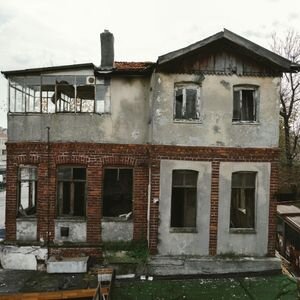
This decision point determines your next year of life. I’ve watched homeowners agonize over this choice, and honestly, the right answer depends on factors most people don’t initially consider.
Let’s start with the reality of restoration in Alaska. Our construction season runs roughly from May through September. Miss that window, and you’re waiting until next year for major work. Materials cost more here than anywhere else in the country. Skilled contractors book months in advance.
For many homeowners, restoring a fire-damaged property can be a lengthy and challenging process. Insurance claims, contractor availability, permit requirements, and Alaska’s seasonal construction constraints can all contribute to significant delays. In some cases, rebuilding may take many months or even longer, requiring owners to manage temporary housing arrangements and ongoing project coordination throughout the restoration process.
Compare that to their neighbor, who sold as-is to a cash buyer in September 2025—closed in three weeks. I used the proceeds, plus insurance money, to buy a move-in-ready home in Chugiak by November.
Restoration makes sense when you have time and emotional energy for a long project. Insurance coverage is comprehensive. You love the location and can’t imagine living elsewhere. The damage is primarily cosmetic or limited to specific areas, and you have temporary housing arrangements you’re comfortable with.
As-is sales make sense when you want to move on quickly and when insurance coverage is limited or disputed. The property has multiple complex issues beyond fire damage. You’re relocating out of Alaska, and Repair estimates exceed your comfort level.
Here’s what restoration actually costs in Alaska. I’ve seen projects run 40-60% over initial estimates. That $150,000 restoration estimate often rises to $220,000 by the time it’s completed. Supply chain delays, weather delays, and change orders can accumulate quickly.
Meanwhile, as-is sales provide certainty. You know exactly what you’re getting and when—no surprises, no cost overruns, no contractor headaches.
The emotional factor matters too. Some homeowners can’t bear to watch their property demolished. Others can’t handle the stress of managing a complex restoration. There’s no right or wrong choice, but be honest about your tolerance level.
Cash buyers like Alaskan Home Buyers often present the clearest path forward. Many homeowners choose to sell my house fast in Alaska instead of dealing with long restoration timelines, contractor delays, and rising repair costs. They provide firm offers within days, close quickly, and handle all the complexity. You can focus on your next chapter instead of managing contractors and permits.
Fire Damage Cleanup Costs Alaska Property Restoration Estimates
If you’re not prepared, the costs of cleaning up Alaska will shock you. I’ve seen estimates range from $15,000 for minor smoke damage to $180,000 for complete fire restoration. Understanding these costs helps you make informed decisions about whether to restore or sell as-is.
According to statistics from State Master, the average cost of damage per residential fire in Alaska is $16,207. But this figure includes all fires, from minor kitchen incidents to total losses. Significant fire damage costs much more.
Debris removal and demolition: $8,000-$25,000 for a typical home. This includes safe disposal of fire-damaged materials, which often contain hazardous substances. In remote areas, transportation costs add significantly to disposal expenses.
Structural cleaning: $12,000-$35,000. Smoke penetrates everything. Professional cleaning involves specialized equipment and chemicals. In Alaska’s dry climate, smoke odors can be particularly persistent.
Environmental remediation: $5,000-$20,000. Many older homes contain asbestos and lead paint that are toxic when burnt. No other work can be started until professional abatement is done.
Electrical system replacement: $8,000-$18,000. Fire and water damage typically require complete electrical rewiring. Alaska’s electrical codes are strict, especially for rebuilt structures.
Plumbing restoration – $6,000 to $15,000 13. Heat can damage pipes, and the water used to battle the fire might further harm the plumbing. It’s more complicated in Alaska because of frozen pipe problems.
HVAC replacement: $12,000-$25,000. Ductwork throughout the house typically needs to be replaced after significant fire damage. Alaska’s heating requirements make the process especially expensive.
These are just the cleanup costs before any rebuilding begins. In remote areas where cleanup and contractor availability can be unpredictable, many homeowners choose to work with we buy houses in Anchor Point AK instead of taking on costly restoration projects. Add construction costs, permits, temporary housing, and the inevitable cost overruns, and you’re looking at substantial expenses.
Remote locations multiply every cost. Getting equipment and materials to a property 50 miles from Fairbanks costs significantly more than working in Anchorage. Some contractors won’t even make cash offers on remote fire cleanup projects.
The timeline matters too. Cleanup can take 2-4 months in Alaska due to weather constraints and contractor availability. During this time, you’re often paying for temporary housing while still carrying costs on the damaged property.
Here’s where as-is sales become attractive. Cash buyers factor in all these cleanup costs when making offers. You receive a net amount without managing cleanup, contractor relationships, or timeline uncertainties.
Companies like Alaskan Home Buyers have developed ties with cleanup contractors across Alaska. Because they work at scale, they can typically do cleanup more efficiently and cost-effectively than individual households.
Fire-Damaged Property Disclosure Requirements: Alaska Real Estate Law
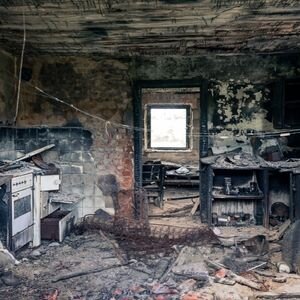
If you’re selling “as-is” or after you’ve restored it, Alaska real estate law requires certain disclosures when fire has destroyed the property. Knowing what those standards are is good for legal reasons, and it helps you create the right buyer expectations.
You must disclose all known fire damage, even if repairs have been completed. This includes: Date and extent of fire damage; Insurance claims filed and paid; Repairs completed and by whom; Any ongoing issues or concerns; and Environmental testing results, if available.
In many real estate transactions in Alaska, a “seller beware” approach is taken, although fire damage is a substantial fact that must be disclosed. You can be held liable if you close and don’t disclose known fire damage.
Pre-restoration sales require disclosure of: Full extent of known damage, Insurance settlement amounts and status, Any safety inspections completed, Environmental concerns identified, and Structural integrity assessments.
Post-restoration sales require disclosure of: Original fire damage extent, all repairs completed, Permits obtained for restoration work, any ongoing warranty or guarantee information, and Insurance claim history.
The disclosure protects both parties. Buyers know exactly what they’re purchasing. Sellers protect themselves from future liability claims.
Here’s what many sellers don’t realize: proper disclosure often accelerates sales rather than slowing them down. Buyers of fire-damaged properties expect full transparency. Trying to hide or minimize damage typically backfires during inspections.
Cash buyers who specialize in damaged properties actually prefer comprehensive disclosure. It helps them provide accurate offers and avoid surprises during due diligence.
I’ve seen sellers worry that full disclosure will hurt their sale price. In reality, experienced buyers of fire-damaged properties already assume worst-case scenarios. Honest disclosure often results in better offers because it reduces buyer uncertainty.
Alaska’s disclosure requirements also extend to insurance matters. If your insurance company has canceled your policy due to fire damage, or if you’ve been denied coverage renewal, the situation must be disclosed to potential buyers.
We must pay special attention to environmental concerns. If the fire disturbed asbestos, lead, or other hazardous materials, you must disclose the situation, even if professional cleanup has been completed.
Working with companies like Alaskan Home Buyers simplifies the disclosure process. They’re familiar with Alaska’s requirements and can guide you through proper documentation. This reduces your legal risk while streamlining the transaction.
Alaska Fire-Damaged Property Legal Considerations: Seller Rights
Your rights as a seller of fire-damaged property in Alaska include several protections, but you need to understand them to use them effectively. I’ve seen sellers give up thousands of dollars because they didn’t know their legal options.
Insurance settlement rights: You own your insurance payout, not the property. This means you can collect insurance money and sell the damaged property separately. The insurance company can’t force you to use settlement funds for repairs if you choose to sell instead.
As-is sale rights: Alaska law allows property sales “as is” with proper disclosure. You’re not required to repair fire damage before selling. Buyers purchase the property in its current condition, assuming all risks.
Timing flexibility: You’re not required to sell immediately after fire damage. You can take time to evaluate options, get multiple opinions, and make informed decisions. However, some insurance policies have time limits on when repairs can begin.
Buyer qualification rights: You can require proof of funds from cash buyers and pre-approval letters from financed buyers. This protects you from buyers who can’t actually complete the purchase.
Multiple offer evaluation: You can consider multiple offers and negotiate terms beyond just price. Timeline, contingencies, and buyer qualifications all matter in fire-damaged property sales.
Professional consultation rights: You can hire attorneys, real estate professionals, and other experts to advise you. The costs are often worth the protection and guidance they provide.
Disclosure limitation rights: While you must disclose known material facts, you’re not required to investigate or discover problems you’re unaware of. Your disclosure obligation covers what you actually know.
Here’s a crucial point many sellers miss: you are entitled to sell to whoever offers the best overall terms, not necessarily the highest price. A cash buyer offering $180,000 with a 14-day close might be better than a financed buyer offering $200,000 with a 60-day close and multiple contingencies.
Alaska’s legal framework generally favors clear, transparent transactions. Courts prefer situations where both parties understood what they were agreeing to. This makes proper disclosure and documentation essential for protecting your legal position.
I’ve worked with sellers who tried to handle fire-damaged property sales without professional help. The legal complexity often exceeds what individual homeowners can manage effectively. Working with experienced cash buyers or real estate professionals usually provides better legal protection.
Companies like Alaskan Home Buyers understand Alaska real estate law and can structure transactions that protect seller rights while providing swift, reliable closings. They handle the legal complexity so you can focus on your next steps.
If you’re ready to explore your options or want a no-obligation cash offer, you can reach out to Alaskan Home Buyers to get started today.
Frequently Asked Questions
Can You Sell a House with Fire Damage?
Yes, you can absolutely sell a house with fire damage in Alaska. You have two main options: restore the property first and then sell, or sell as-is to a cash buyer. As-is sales are often faster and less stressful, typically closing within 2-4 weeks. Cash buyers like Alaskan Home Buyers specialize in purchasing fire-damaged properties throughout Alaska and handle all cleanup and restoration themselves.
How Much Is 1 Acre of Land Worth in Alaska?
Land values in Alaska vary dramatically by location and access. In Anchorage, an acre might be worth $50,000 to $200,000, depending on zoning and utilities. Rural areas near Fairbanks or the Kenai Peninsula might range from $5,000 to $25,000 per acre. Remote locations with no road access can be worth $1,000 to $5,000 per acre. Fire damage typically doesn’t affect underlying land value unless it damages wells or septic systems or causes erosion.
What to Do with a Fire-damaged House?
Please start by securing the property and contacting your insurance company immediately. Document all damage with photos and videos before cleanup begins. Get professional structural and environmental assessments to understand the extent of the damage. Then evaluate your options: restore and sell traditionally, or sell as-is to a cash buyer. Consider your timeline, financial situation, and stress tolerance when making this decision.
Helpful Alaska Blog Articles
- Selling a Probate House in Alaska
- How to Sell a Hoarder House in Alaska
- Does a Seller Pay Closing Costs in Alaska?
- Can I Sell a House with a Quitclaim Deed in Alaska?
- Sell House with Water Damage in Alaska
- Sell Fire-Damaged House Alaska
- How To Sell Your House With Foundation Problems In Alaska
- Selling home with reverse mortgage in Alaska
- Can You Sell a House with Tenants in Alaska
- Can You Sell a House With Asbestos in Alaska
- Can You Sell a House as-is Without Inspection in Alaska
- Is the Seller Responsible for Any Repairs After Closing
- How Long Does It Take to Sell a House in Alaska