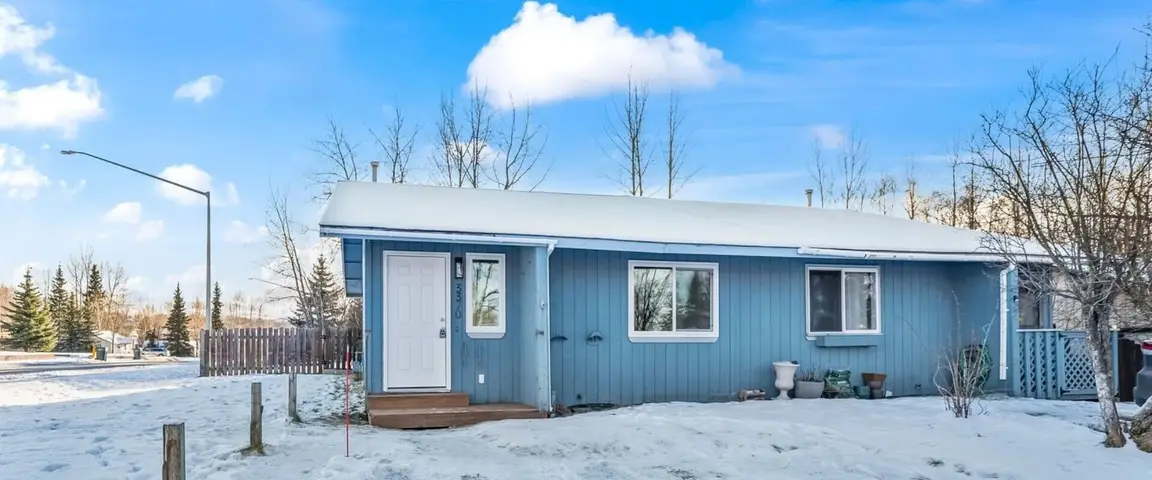

Equity isn’t the number on a home value website. It’s what’s left after the mortgage payoff, the commissions, the title work, and the repairs a buyer’s inspector talks you into. Those two figures can sit thousands of dollars apart. Most sellers find the gap at the closing table, long after they’ve listed. Let’s find it sooner.
What the Usual Equity Advice Leaves Out
Your mortgage payoff is always bigger than the balance on your last statement. Interest keeps adding up until the day the title company wires the funds. Some servicers also tack on a fee for the payoff statement or for recording the lien release. So the equity figure in your head is a little rosy before anything else happens.
That gap stings more when the property needs work.
A couple of years ago I sat with a longtime landlord in Wasilla. He’d owned the same duplex since his kids were little. His contractor priced a new kitchen for the upstairs unit, cabinets and subfloor and all. The number came back higher than what that kitchen would add on an appraisal, and I’ve watched that gap trip up plenty of owners. He ended up selling that spring with the old oak cabinets still hanging. He walked away with more money than the remodel would’ve left him. If you’d rather skip the remodel too, you can sell your house fast in Wasilla as it stands.
Repairs drain equity from two sides. You spend cash you won’t fully get back. The mortgage, insurance, and heating bills keep coming while the job drags on.
Common advice says fix everything before you list. I don’t buy that as a blanket rule. Repair what makes a house safe and financeable, and leave style choices to whoever moves in. Buyers rip out brand new countertops all the time.
What Is Home Equity and Why Does It Matter for Alaska Homeowners?
You might think equity is just paper until someone buys the place. That’s partly true, and it’s also how people get burned. Paper equity still decides whether you can refinance, whether a lender will approve a home equity line of credit, and whether a sale even clears your debt.
Equity is the share of your property value you own outright. Take market value and subtract each claim against the title.
Across the U.S., mortgage holders ended the second quarter of 2026 with a record $18 trillion in home equity, per ICE’s August 2026 Mortgage Monitor. Of that, 47.5 million borrowers held $11.7 trillion they could tap while keeping a 20 percent stake. From what I’ve seen buying houses, a lot of that wealth belongs to people who bought before rates climbed.
Alaska homeowners face an odd wrinkle. Similar sales are fewer and farther apart, and a house in Anchorage can be worth far more than a similar one in a small town off the road system. When comps are thin, lenders ask more questions. Property value here is less settled than in a tract where forty look-alike homes sold last year.
Does any of that change how much equity you need? Not really. It does change how much you should trust your own guess before you act on it.
How to Calculate Equity in Your Home Step by Step
In September 2026, the median Alaska property sold for $415,805, up 4.0 percent from a year earlier, with a median of 24 days on market, per Redfin’s state market data. If your place sits near the middle of the market, that’s your starting point.
Step one is pinning down market value. A working real estate agent will run a comparative market analysis for free, using recent sales, not a formula. A full appraisal carries more weight with lenders. In Anchorage, HomeBlue puts a typical single-family appraisal at $520 to $1,060.
Second, call your servicer and ask for a written payoff quote good through a specific date. Not the balance. The payoff.
Next, add up every other lien. That means a second mortgage, a HELOC draw, a contractor’s lien, unpaid borough property taxes, or a judgment from an old credit card. A title search turns all of it up sooner or later, and a surprise lien is a common reason a closing slips.
Subtract the total debt from the value and you’ve got gross equity. On a house worth the state median with $300,000 in combined loans, that’s roughly $116,000 before any selling costs.
One habit I’d push on every homeowner is getting the payoff quote before you call an agent. People price their house around a mortgage figure from memory. Then the real numbers land $6,000 off, after they’ve already told the family what selling will net. If you’re still paying on the loan, this guide to selling a mortgaged house in Anchorage covers what happens to it at closing.
What Is a Good Home Equity Percentage, and How Do You Build It Faster?
“Do I need twenty percent?”
I hear that one every week. Twenty percent matters to lenders. It’s the point where you can ask your servicer to cancel private mortgage insurance, and many HELOC lenders want you to keep 15 to 20 percent after the new line. For selling, it’s a nice cushion, not a must.
In that same quarter, the average borrower with tappable equity had about $212,000 available. Owners who bought in Alaska before 2021 often own a big chunk outright. When I’ve bought from them, that’s mostly because they financed at lower prices and paid down principal while the market rose.
Building equity faster comes down to a few levers. Extra principal payments knock years off the amortization schedule, and early in a loan most of each payment goes to interest anyway. Refinancing into a shorter term does the same job with more discipline built in. Appreciation handles the rest, and you don’t control it.
What about renovations? Smaller outside jobs tend to pay back best. In the 2025 Cost vs. Value report, a new garage door and a steel entry door topped the list, ahead of all kitchen and bath jobs. A new roof, a working furnace, and a dry crawlspace protect value more than they add it. That still beats watching a sale collapse over a lender-required repair.
Skip the hot tub and the fancy landscaping. Alaska buyers price those at close to zero.
What Should You Know Before Applying for a Home Equity Loan?
Borrowing against the house to fix the house only pencils out when the repair adds more value than the loan costs. I’ve watched that math fail more often than it works, most often on jobs that felt urgent at the time. If you’re curious who’s giving this advice, meet the duo behind Alaskan Home Buyers.
A home equity loan hands you a lump sum at a fixed rate. A line of credit works like a revolving account with a variable rate, so payments can jump when the index moves. Both sit in second position behind your first mortgage. They also carry closing costs, and both shrink the equity left at sale.
About 813,000 borrowers nationwide were underwater in the second quarter of 2026, up 44 percent from a year earlier. They’re clustered among people who bought between 2022 and 2025. Negative equity doesn’t announce itself. It shows up when someone has to move and finds the payoff is bigger than the offer.
Lenders will also want an appraisal, a debt-to-income ratio that fits their guidelines, and proof you can carry both payments. Approval takes weeks, not days.
If the real goal is getting out from under the property, a second lien is the wrong tool. Selling clears the debt, while borrowing pushes it down the road and adds interest. I have that talk with half the homeowners who call Alaskan Home Buyers asking about repair money.
How Do Alaska Mortgage Brokers and Lenders Compare?
One seller came to me with a bank’s loan offer carrying an origination fee and a rate a full point above what a local credit union offered on the same file. Two weeks and one more form later, her monthly payment dropped by about the cost of a decent used truck payment.
Shopping lenders is dull work. It pays better per hour than almost anything else in this process.
Credit unions in Anchorage and Fairbanks tend to price home equity products well and keep the loans in-house, so underwriting bends a little more on unusual properties. Brokers shop several wholesale lenders at once. That helps when a house has acreage, a well, or a cabin-style build that national underwriters flag, and I’ve seen sales die over just that kind of flag. Big banks move slower, though they can win on relationship pricing if your deposits live there.
On a home equity loan, compare the Loan Estimate forms line for line and ignore the posted rate. HELOCs come with Truth in Lending disclosures, and you read those the same way. Origination charges, appraisal fees, title costs, and prepayment terms swing more between lenders than interest rates do.
Homeowners nationwide pulled about $47 billion of equity in the first quarter of 2026, the highest first-quarter total since 2021, and second liens drove most of it. People are guarding their low first-mortgage rates instead of refinancing it all. That’s a fair plan, as long as the second lien costs less than the problem it solves.
How Much Equity Do You Need to Sell Your House in Alaska?
For years I told people ten percent was the line. That was lazy advice.
Ten percent of a $200,000 house and ten percent of a $600,000 house fund wildly different closings. The honest answer is in dollars. You need enough to cover the mortgage payoff, the selling costs, and the cash you’ll need to land somewhere else.
Sellers nationally pay about 9.42 percent of the final sale price once commission, closing costs, and prep work are counted, per Clever Real Estate’s February 2026 cost breakdown. The rest of the bill covers things like title insurance, escrow fees, prorated property taxes, and buyer concessions. You won’t write a check for any of it, because it comes off the top.
Run the math on your own numbers. Take a fair sale price and subtract 8 percent, or 10 percent if it needs work. Subtract the payoff quote and look at what’s left. Is that enough for a deposit and a move? If yes, you can sell. If it’s thin, you’ve still got options worth weighing.
Selling as-is to a direct buyer changes the math, since no commission or repair credit comes out of your side. The offer is lower than retail, and the costs after it are close to nothing. Which path nets more depends on the condition of your property, and I’ve seen it go both ways. To run both numbers side by side, start with how we buy houses in Alaska and what our offer covers.
When the Numbers Are Tight, Look at Net Proceeds Instead of Price
That’s the spot where most sellers lose the thread. Price is the headline, and net proceeds pay for your next place.
Anchorage closed August 2026 with a median sale price of $464,692 and a median of nine days on market, per Redfin figures compiled in this market summary. That’s a fast market with strong prices. Plenty of sellers there still net less than they expected, because repairs, concessions, and two extra months of carrying costs ate the gap. This breakdown of the costs of selling a home in Anchorage shows where that money usually goes.
One quick note on taxes. You may qualify for a federal break if you owned the home and lived in it as your main residence for at least two of the five years before the sale. IRS Topic 701 explains how you can exclude up to $250,000 of gain, or $500,000 on a joint return. Inherited and rental properties follow other rules, so a CPA earns the fee on those files.
A woman in Fairbanks called me after her father passed. She was holding the keys to a house with thirty years of belongings inside and a garage stacked to the rafters with snowmachine parts. Her two brothers lived out of state and wanted a clean exit. She chose a cash sale and kept the photo albums and her dad’s tools. The siblings split the proceeds without anyone flying north twice, and I’ve seen that same pattern in several inherited Fairbanks homes. Heirs settling an estate from out of state can see how we buy houses in Fairbanks before anyone books a flight.
Nobody gave up equity there. She spent a little of it to buy an ending.
Frequently Asked Questions
Is Tapping the Equity in Your Home a Smart Move?
That hangs on what the money does. Borrowing against your house to pay off high-interest debt, or to make a repair that protects the property’s value, can make sense because you’re swapping expensive debt for cheaper debt. Borrowing to cover everyday shortfalls puts your home on the line for something that won’t build wealth. If a sale is anywhere on your horizon in the next couple of years, a second lien tends to muddy it.
What Hurts a Home’s Value the Most?
Water does more harm to value than anything else I run into. A leaking roof, a failing foundation, or a crawlspace that’s been damp for years shows up as mold and rot. Buyers assume the worst about what they can’t see. After water comes deferred maintenance stacking up, like an aging furnace or a roof past its life. Odd floor plans and unpermitted additions also knock offers down, since lenders get skittish about financing them.
How Long Does It Usually Take to Build Meaningful Equity?
The usual rule of thumb is about five years before a sale clearly nets you money. Early mortgage payments go mostly to interest, and closing costs eat the first chunk of appreciation. Strong price growth can shorten that window. Where prices sit flat, it can stretch to six years or longer. Paying extra toward principal, even a few hundred dollars a month, moves the date up faster than most people expect.
Does a Cash Offer Always Mean a Lowball Price?
No, though it does mean a discount against a perfect retail sale, and anyone telling you otherwise is selling something. A fair cash offer reflects what the house is worth in its current condition, minus the repairs and resale costs the buyer takes on. The honest test isn’t the Zillow estimate against the cash number. Compare the cash number to what you’d really bank after repairs, agent commission, and concessions. Then subtract the months of mortgage, insurance, heating fuel, and property taxes you’d carry while the listing sits.
What Should I Do Before Accepting Any Offer?
Get the payoff figure from your lender in writing, not the balance you see in the app. Ask the buyer to put the offer in writing with the closing date and any contingencies spelled out. Confirm who pays title and closing costs. If anything feels rushed or the number keeps moving, slow down. A real buyer will wait a few days while you check the math. If you’d like a second set of eyes on an offer, contact our team and we’ll go over the numbers with you.
If you own a house in Anchorage, Fairbanks, the Valley, or somewhere farther out, you might wonder whether selling now truly puts money in your pocket. It costs nothing to find out. Run your own numbers first. Then, if you’d like a real figure to compare against, ask for one and see how it stacks up. There’s no pressure and no obligation, and it never hurts to know where you stand.